As a waiting parent, the daydreams of life with a baby are likely recurrent for you. You envision the day a child is placed into your arms, and when the first days of new-parent bliss are underway. You eagerly anticipate a year of firsts as a new parent with this bundle of joy at the center of your lives.
But what do you envision those first few days and months to look like for the birth mother who placed her child in your arms?
It’s not uncommon for a waiting parent to say, “I haven’t thought of it” when asked that question. It’s important that you consider this part of the process, as adoption is more than just placement day.
Understanding Her Experience
The mom on the other end of this story has spent nine months with this child growing inside her, reminded of her baby every time they kicked or rolled around. She delivered this baby, surrounded by a nursing team. And then she went home. Alone. Sometimes, literally driving herself home alone, or coming home to an apartment without waiting arms to care for her healing body and soul. (You may recall going into depth about this in our course, A Tale of 2 Mothers!)
She knows she isn’t parenting this baby, but her body doesn’t. Her postpartum hormones rage, and her body completes the bleeding and aching of postpartum weeks. Her milk comes in, and with no baby to feed, she struggles through the uncomfortable days of pain while her milk dries up. For many moms, without the baby in her arms, she often also doesn’t have the support system of someone showing up with food or flowers or just extra arms to help her.
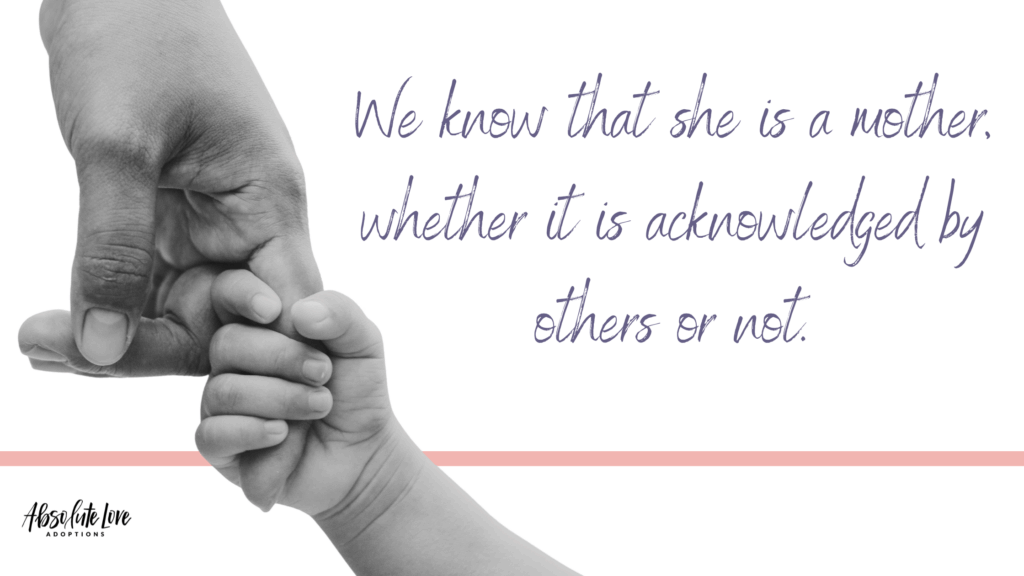
We also know that the first year is especially difficult for mothers who have placed children for adoption. She struggles through the “firsts” in her baby’s first year, without the opportunity to share those moments. Because she isn’t parenting, she may feel like she isn’t a “real” mother. (But we know she is!)
She may feel an immense sense of loss. (We can remind her that her child will always be a part of who she is.) She may also feel relief and fulfilment in having made an adoption plan, and seeing her child cared for by you.
This duality of joy and sorrow is underlying in adoption, no matter how “successful” the adoption is. So how can we support her?
Gifting
Gifts from adopting parents: A cultural norm we all share in caring for our loved ones is in gifting. We often send a little something to a friend who is struggling or who is celebrating. Gifts are a great way to acknowledge you’re thinking of her.
Unfortunately, many gift ideas for the adoption community come across as generic or impersonal, or dismiss the complexities entirely. We lovingly curated an assortment of adoption sensitive care packages, called SOLACE, with this exact dynamic in mind. The care packages offer recognition and comfort to birth mothers as they process the lifelong grief of placing a child for adoption, and share in the joy of their child’s life.
These boxes make an impact. The most profound acknowledgement we’ve received from a mother who was gifted the box was when a mom called us in tears, saying our SOLACE gift was the first time in the 20 years since placement that she was acknowledged as a mother.
Gifts from the child: Receiving a gift made from the child is a powerful way to show birth mom that the relationship with her child is important. Consider sending handwritten letters or cards, pictures your child has drawn, crafts they have made at the kitchen table, art work from school, or anything they’ve written. These can be especially meaningful.
Honor Your Post Adoption Contact Agreement
The most important promise you make is the one that is discussed around the post adoption communication. Some parents come home from placement with a written, legally enforceable contract outlining expectations. Others have verbal agreements. Some have nothing.
We highly encourage you to have these conversations with the support of an adoption competent social worker and lawyer, so that you can set clear expectations on when and how you will communicate with the birth family.
And then do that. No excuses, no withdrawing when it gets difficult, and no changing the plan because of your own feelings around the relationship. Work to be the person you said you would be when you agreed to communication.
If you need more support in how to prepare yourself for open relationships, and the post adoption, take our course to learn all about it: A Tale of 2 Mothers
The absolute worst thing you can do is make promises that you don’t honor. Unfortunately, we have seen firsthand the impact of these disappointments when adoptive families withdraw after placement. It disrupts a birth mother’s life profoundly and indefinitely in a negative way.
What if I don’t have contact with my child’s birth mother?
It’s still important for your child to have some connection to their birth family because it is part of who your child is at their core. Your child’s birth family holds an important piece to your child’s puzzle.
Look inside yourself: Even if your child’s birth mom is not open to a relationship at this point, she may still be open to a relationship later in her life. She may want a closer relationship in years to come – and if that’s the case, we can “leave the light on for her” to show her we will be open and ready if that happens.
Want to learn more about how to leave the light on? Read our blog Knock Knock: Adoptive parents as gatekeepers
Having a “spirit of openness” in your home allows space for your child to discover their roots freely and without judgment. Learn more about that by watching this video by Amara here:
If you don’t have a relationship with your child’s birth mother, there’s ways to connect!
- If possible, ask the agency you’re working with to set up an app like 23snaps or a Google photo album at the hospital for you and your child’s birth parent. You can share pictures and captions just between you and your child’s birth mom. Even if you don’t always know when she goes on to see pictures, you can keep the door open for further communications and deepening relationships: “We’re always open for a phone call if you’d like,” or “Feel free to ask us anything.” Then, tell your child(ren) when you’re uploading photos to the app. It communicates to them that the relationship with our child’s birth mom is important. “I’m putting these pictures on the app. I’m hoping Mommy Jocelyn will get to see them.”
- Write cards or letters to your child’s birth mom, and send them to the agency that facilitated your placement. If your child’s birth mom stops in, she can collect the mail for her. (Some agencies prefer flat items as they are easier to store.) As your child grows, he or she can make pictures, write letters, or share school projects with their birth mom.
- Keep a box just for your child to place their drawings, school projects, cards, letters, pictures, or anything else they’d like to show their birth parent(s) someday. Even if they never have the chance to give it to them in person (but it would be a beautiful gift if they do!) you will be setting the child up for remembering an important part of their life. Use the opportunity to say something like, “Do you think Mommy Christina likes Pokemon, too? We could keep these Pokemon cards for her, just in case. What are some other things you like that you think Mommy Christina may also like?” This can be a helpful practice for you as an adoptive parent, too.
- Ask your child’s teacher to have your child make two cards for Mother’s Day.
Keeping the Family Connection
Remember that withholding birth family from an adoptee is like erasing a part of their identity. Non adoptees sometimes overlook this, thinking the adoptive family can entirely fill the role of family relationship. This perception comes from a place of privilege of having been raised alongside genetic mirrors.
Ultimately, your goal in post adoption life is to give your child the best of yourself: a secureness in who you are as a parent. You can accomplish this by letting go of the fear of the unknown, and opening your heart up to the wholeness of your child which includes their birth family . This not only deepens the connection between you and your kids, but it gives them a better relationship to themselves.
It all comes down to loving your child, and loving your child’s birth family is a way to love your child more deeply, and completely. In the end, their birth family just wants to be reassured that she made a good decision in adoption, and that her kid is safe, healthy and happy.
Want to hear it from a birth mom herself? There are many birth moms who make themselves available as a resource for adoptive parents. These women are full of life experience and can guide you in your specific questions and concerns.